

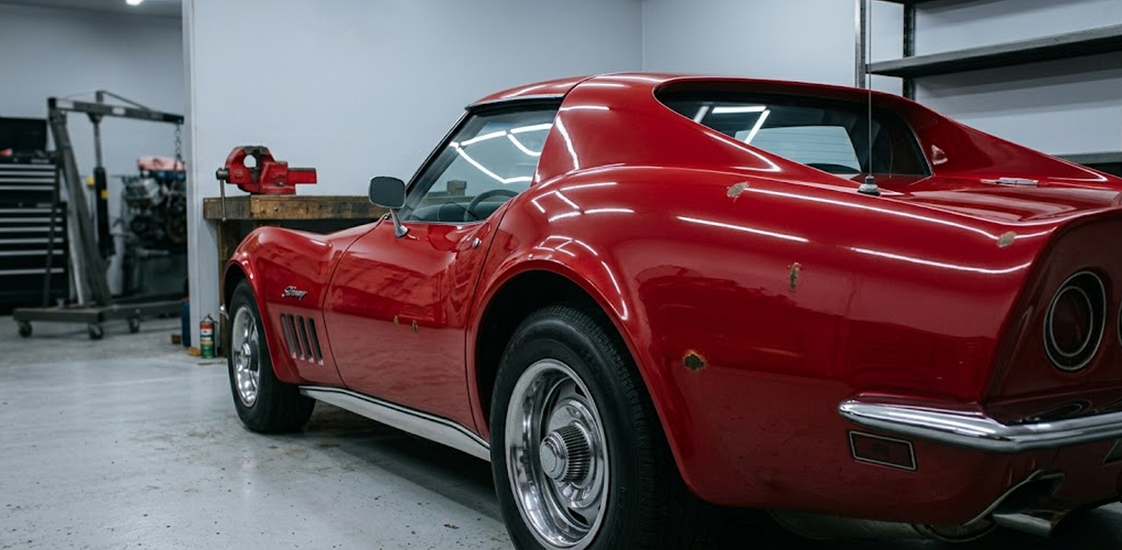
How to Stop Car Rust Before It Starts: A Complete Prevention Guide for Vehicle Owners
Posted by Phil Potocki on 13th Jul 2026
Road salt destroys more classic cars than accidents do. The American Automobile Association estimates that corrosion costs U.S. drivers over $3 billion annually in vehicle damage, and rust is the leading culprit. If you own a collector car, a weekend Mustang, or a truck you plan to keep for 20 years, the time to act is before you see a single orange bubble forming under the paint.
This guide covers the science behind corrosion, the seven most common triggers vehicle owners miss, every proven prevention method ranked by effectiveness, and why enclosed storage remains the most overlooked tool in any serious owner's rust-fighting plan. By the end, you'll have a year-round routine you can actually follow.
Why Car Rust Happens: Understanding the Science of Corrosion
Rust is electrochemical. Iron in your vehicle's steel reacts with oxygen and water to form iron oxide, and once that process starts, it accelerates on its own. The technical term is oxidation, and it doesn't need much to get going: a microscopic paint chip, a pocket of trapped humidity, or a thin film of road salt bridging two metal surfaces is enough.
Three elements must be present simultaneously for rust to form: iron (or steel), moisture, and an electrolyte that conducts the reaction. Road salt is the most efficient electrolyte available. That's why cars in coastal states and northern snow-belt regions corrode at rates two to four times faster than vehicles stored in dry inland climates, according to U.S. Department of Transportation corrosion research.
Paint is your first line of defense, but it's imperfect. UV radiation degrades clear coat over time, making the surface porous and allowing moisture to penetrate. Chips and scratches expose bare metal directly. Even a perfectly maintained exterior can trap condensation underneath a traditional car cover, creating a sealed wet environment that speeds up the very reaction you're trying to prevent.
Understanding this mechanism changes how you approach car rust prevention. You're not just keeping the car dry. You're eliminating one or more of the three required elements: removing the electrolyte, controlling humidity, and maintaining a continuous paint barrier.
The 7 Most Common Causes of Vehicle Rust (and How to Avoid Them)
Most rust doesn't start on flat body panels where owners look. It starts in hidden places: pinch welds, rocker panels, wheel wells, the underside of trunk floors, and around door drain holes that have clogged with debris. Here are the seven triggers that account for the vast majority of corrosion cases.
- Road salt accumulation. Salt bonds to metal surfaces and holds moisture against them long after the road dries. Rinse the undercarriage within 48 hours of any salted road exposure, not just after visible slush.
- Paint chips left untreated. A chip the size of a pencil eraser can rust through a quarter panel in 18 months in a humid climate. Touch-up paint applied within days of the chip appearing is the cheapest repair you'll ever make. See our guide on fixing paint chips yourself before rust sets in for a step-by-step walkthrough.
- Trapped moisture under covers. Traditional car covers made of fabric or vinyl trap condensation against the paint, especially during temperature swings. If you're covering a vehicle and not providing airflow, you may be accelerating rust rather than slowing it.
- Clogged drain holes. Every modern vehicle has drain holes in doors, rocker panels, and the trunk floor. Leaves, dirt, and road grime plug them. Water pools. Rust forms from the inside out, which is the most dangerous kind because you can't see it until the damage is structural.
- High-humidity storage environments. A closed garage in a humid climate can average 70 to 80 percent relative humidity in summer. At that level, bare metal begins corroding within hours. Concrete floors release moisture upward, concentrating humidity at wheel height.
- Coastal air and industrial fallout. Salt air near ocean coastlines deposits chlorides on every exterior surface continuously, even on dry days. Industrial areas add sulfur compounds that react with paint and accelerate the electrochemical process.
- Neglected undercoating. Factory undercoating degrades over 10 to 15 years. Older vehicles, especially classics from the 1960s through 1980s, often have no meaningful undercoating left, leaving the frame, floorpans, and suspension components fully exposed.
Proven Car Rust Prevention Methods: From Washing to Coatings
Effective rust protection for cars is a layered system. No single product or habit eliminates the risk on its own. Think of it the way a pilot thinks about redundancy: each layer covers the failure point of the one before it.
Regular Washing with Undercarriage Rinse
Wash the vehicle every two weeks during winter months and after any drive on salted roads. Use a pressure washer or a dedicated undercarriage attachment to flush wheel wells, rocker panels, and the frame. A standard garden hose doesn't generate enough pressure to dislodge packed salt.
Paint Chip Repair
Keep touch-up paint matched to your vehicle's color code on hand. Clean the chip with isopropyl alcohol, apply a thin coat, let it cure for 48 hours, and sand lightly if needed. This is a 20-minute job that prevents a $1,500 body repair.
Ceramic Coating or Paint Sealant
Professional-grade ceramic coatings create a chemically bonded hydrophobic layer over the paint that repels water, salt, and contaminants. A quality ceramic coating applied by a trained installer lasts three to five years and significantly reduces the porosity of the clear coat. Consumer-grade paint sealants offer a shorter protection window (six to twelve months) but are a solid annual maintenance step for vehicles that aren't daily drivers.
Rust-Inhibiting Undercoating
For vehicles over ten years old, or any classic car, professional rubberized undercoating applied to the frame, floorpans, and wheel wells provides a physical barrier against moisture and road debris. The National Highway Traffic Safety Administration recognizes corrosion as a structural safety concern, which is why many states now require rust inspections during vehicle safety checks. Undercoating is not optional on a car you plan to keep for decades.
Waxing and Paint Maintenance
Carnauba or synthetic wax applied every three months fills microscopic surface defects, slows UV degradation, and gives water a surface to bead and roll off rather than pool. It's the lowest-cost preventive step with the widest surface coverage.
Drainage Maintenance
Clear drain holes annually with a flexible wire or compressed air. Check doors, trunk floor, and rocker panels. This takes 15 minutes and costs nothing.
How Proper Vehicle Storage Stops Rust in Its Tracks
Here's the prevention method that almost every generic rust guide ignores: controlling the storage environment itself. Washing, coating, and waxing all protect against external exposure. But if your vehicle sits for weeks or months in a humid garage or under a traditional cover, you're fighting corrosion from the outside while creating ideal conditions for it on the inside.
CarCapsule invented the inflatable vehicle storage bubble in 1991, and it's been recognized by Motor Trend as a Top 10 Most Innovative Car Care Product. The concept is straightforward and, once you understand the corrosion science from the section above, obviously effective: seal the vehicle inside a clear PVC enclosure and continuously circulate filtered air through it. Continuous airflow prevents the humidity from building to the levels required for oxidation to occur. There's no trapped condensation because moisture-laden air is constantly being replaced with filtered, drier air.
That matters most during seasonal storage. A classic Corvette, Porsche, or muscle car sitting under a fabric cover in a garage from November through March is breathing humid, potentially salt-contaminated air for five months straight. A vehicle stored in a CarCapsule is sitting in a controlled micro-environment where the air quality is actively managed.
For vehicles kept in a garage, the Indoor CarCapsule provides full enclosure with filtered airflow and a clear shell that lets you display the vehicle without exposing it to dust, insects, rodents, or humidity spikes. For vehicles stored without a dedicated garage, the Outdoor CarCapsule is built to handle UV exposure, rain, wind, and temperature swings while maintaining the same internal airflow protection.
Sizing is simple: measure your vehicle's total length and add approximately two feet of clearance on each end. CarCapsule offers units sized for cars, trucks, SUVs, and vans, with a motorcycle-specific option for two-wheel collectors. Every unit ships with a one-year warranty, and the team at (219) 945-9493 can help you select the right fit if your vehicle is outside standard dimensions.
If your vehicle is stored outside without shelter, the risk of rust compounds quickly. Our detailed guide on protecting a car that sits outside covers the specific risks of outdoor exposure and the steps that address each one. Pairing those surface-level protections with an Outdoor CarCapsule gives you coverage at every layer.
Owners of vintage or luxury vehicles should also read our dedicated resource on protecting vintage and luxury vehicles from rust and corrosion, which goes deeper on the vulnerabilities specific to older metal and factory finishes.
When to Inspect, When to Act: Building a Year-Round Rust Prevention Routine
Rust prevention is not a one-time project. It's a calendar. Here's a practical schedule based on what actually causes rust at each point in the year.
Early Spring (March to April)
This is your post-winter audit. Wash the full vehicle including the undercarriage to remove any residual road salt. Inspect wheel wells, rocker panels, door edges, and the trunk floor for bubbling paint or surface rust. Treat any chips immediately. If you find early surface rust, wire-brush it down to bare metal, apply a rust-converting primer, and repaint before it spreads.
Late Spring (May)
Apply a fresh coat of wax or paint sealant after the post-winter wash cycle. If your vehicle is over ten years old, schedule a professional inspection of the undercoating. This is also the right time to clean drain holes before summer rain season.
Summer (June to August)
UV radiation is your primary enemy in summer, not moisture. UV degrades clear coat, which then allows moisture to penetrate the paint layer. Keep the vehicle in a shaded enclosure when not in use. If the car is stored, the clear PVC of a CarCapsule allows visual display while blocking direct UV contact.
Early Autumn (September to October)
This is your pre-winter prep window and the most important period for rust prevention if you live in a northern state. Apply a fresh ceramic sealant or wax. Inspect and clear all drain holes. If the vehicle will be stored for winter, set it up in an enclosed storage bubble before the first salted roads of the season. Getting this done six to eight weeks before snow season means the vehicle is protected before the highest-risk exposure window opens.
Winter (November to February)
For vehicles in active use: wash every two weeks, rinse the undercarriage after every salted road exposure, and park on an elevated surface when possible to reduce the moisture contact from the ground up. For stored vehicles: check the CarCapsule's inflation and filter status monthly. The unit should remain fully inflated with active airflow throughout storage.
A useful reference point: according to research from NACE International (now AMPP), the global authority on corrosion science, controlled environment storage is one of only three proven methods to halt active corrosion entirely, alongside physical barrier coatings and cathodic protection. For a privately owned vehicle, a sealed and ventilated storage enclosure is the only practical application of that principle.
Your Rust Prevention Plan Starts Here
The single most important takeaway from this guide: car rust prevention is a system, not a product. Washing removes the electrolyte. Coatings maintain the barrier. Proper storage controls the environment. Remove all three corrosion requirements and rust cannot form.
Every step in this guide is actionable this week. Start with the inspection, clear the drain holes, touch up any chips, and plan your storage setup before the next salt season hits. If you have questions about fitment or which CarCapsule model is right for your vehicle, call (219) 945-9493 and speak with someone who has been solving vehicle storage problems since 1991.
Protect Your Vehicle from Rust with a CarCapsule: Shop Indoor Storage Solutions or explore Outdoor CarCapsule options built for every vehicle type and storage situation.
Frequently Asked Questions
What causes rust on a car?
Rust forms when iron in your vehicle's steel reacts with oxygen and water in the presence of an electrolyte like road salt. Paint chips, trapped moisture under covers, clogged drain holes, high-humidity storage environments, and coastal salt air are the most common triggers. The reaction accelerates when all three elements (iron, water, electrolyte) are present simultaneously.
How do I stop rust from spreading on my car?
To stop active rust from spreading, remove all loose rust with a wire brush or grinder, treat the bare metal with a rust-converting primer (products containing tannic acid chemically neutralize iron oxide), apply a sealing primer, and repaint. Do not apply paint over active rust. For large structural rust, consult a body shop before the damage compromises safety.
Is rust proofing a car worth it?
Yes, especially for vehicles over ten years old, vehicles in northern or coastal climates, and collector or classic cars. Professional rubberized undercoating costs between $150 and $500 depending on vehicle size and material. A single rocker panel replacement can cost $800 to $2,000. The math favors rust proofing on any vehicle you intend to keep for more than three to five years.
How does vehicle storage prevent rust?
Proper enclosed vehicle storage eliminates two of the three elements required for rust: moisture and the electrolyte environment. An inflatable storage bubble like the CarCapsule continuously circulates filtered air through the enclosure, preventing humidity from reaching the levels needed for oxidation. Traditional covers trap condensation and can actually accelerate rust during temperature swings.
What is the best way to protect a car from rust in winter?
The most effective winter rust protection combines three steps: rinse the undercarriage within 48 hours of any road salt exposure, maintain a fresh wax or sealant layer on all painted surfaces, and store the vehicle in a sealed, ventilated enclosure during periods of non-use. For long-term winter storage, an Indoor or Outdoor CarCapsule provides continuous filtered airflow that prevents the humidity buildup responsible for most cold-weather corrosion.