

How to Prevent Rust on a Classic Car During Long-Term Storage
Posted by Phil Potocki on 23rd Jun 2026
Why Classic Cars Are Especially Vulnerable to Rust
A 1969 Camaro or a numbers-matching Porsche 911 can sit in a garage for six months and come out with surface rust on the brake rotors, floor pans, and trunk seams, even when it never saw rain. That's not bad luck. That's storage physics working against you.
Classic cars built before the mid-1980s were made with single-coat primers, minimal galvanizing, and body seams that trap water. Modern vehicles use zinc-coated steel and multi-layer e-coat primers. Vintage iron does not. According to the U.S. Department of Transportation, corrosion costs vehicle owners an estimated $23.4 billion annually, and collector vehicles face disproportionate risk because of their age, original steel, and the specific conditions of long-term storage.
The real culprit is humidity cycling. Every time outdoor temperatures swing up and down, air inside a garage or under a traditional cover absorbs moisture and then releases it as condensation directly onto your car's metal surfaces. Trapped moisture between a cover and a painted panel is actually worse than open-air exposure in some climates because it has nowhere to evaporate. For a deeper look at what triggers corrosion at the molecular level, see our guide on everything you need to know about car rust.
Three factors compound the risk on classic vehicles specifically:
- Thinner, uncoated steel: Pre-1985 body panels have little to no factory corrosion protection beyond paint.
- Seam construction: Lap-welded seams on Mustangs, Mopars, and GM A-bodies wick and hold water by design.
- Extended dormancy: A car sitting still for months allows moisture to pool rather than evaporate through normal use and heat generation.
Step-by-Step Rust Prevention Before You Store Your Classic Car
Pre-storage preparation is not optional. The condition your car enters storage in is almost always the condition it exits storage in, except for whatever rust formed while it sat. Follow these steps in order.
Step 1: Wash, Clay Bar, and Fully Dry the Car
Surface contamination, road grime, and old wax residue all hold moisture against paint. Wash the car thoroughly, use a clay bar on the paint to pull embedded iron particles, and dry every panel completely, including door jambs, trunk gaps, and the undercarriage. Compressed air aimed into seams and body creases removes water that towels cannot reach.
Step 2: Apply a Quality Wax or Paint Sealant
A carnauba wax or a synthetic paint sealant creates a hydrophobic barrier between the paint and ambient humidity. Apply two coats to the body, hood, trunk lid, and door panels. This won't stop rust on bare metal, but it slows moisture penetration on painted surfaces significantly. Products like Meguiar's Ultimate Liquid Wax or Chemical Guys JetSeal are reliable choices that hold up for six-plus months of storage.
Step 3: Treat Bare Metal and Undercarriage
Any raw metal surface, including freshly machined parts, exposed floor pan metal, and uncoated suspension components, needs a rust inhibitor. Fluid Film, Cosmoline, or a lanolin-based penetrant applied to the undercarriage creates a film that displaces moisture and resists corrosion. Spray it on frame rails, spring perches, and any areas where paint is thin or missing.
Step 4: Change the Oil Before Storage, Not After
Used motor oil contains combustion byproducts, including acids that corrode cylinder walls during long-term storage. Change the oil and filter before the car goes into storage so fresh, clean oil coats every internal surface. This is one of the most consistently overlooked steps in pre-storage prep.
Step 5: Fog the Cylinders
Remove each spark plug, spray fogging oil (like WD-40 Specialist Long-Term Corrosion Inhibitor) into each cylinder, and reinstall the plugs. This prevents surface rust on cylinder walls, which can score rings and cause compression loss when you restart in spring.
Step 6: Protect the Interior and Trunk
Vacuum and clean the interior completely. Any food residue, leaf debris, or moisture trapped in carpet accelerates both mold and floor pan corrosion from the inside out. Place a small container of silica gel desiccant under each seat and in the trunk. Replace them every 60 to 90 days if you're in a high-humidity environment.
Step 7: Inflate Tires to Proper Pressure and Use Tire Cradles
Flat-spotted tires are a secondary concern here, but under-inflated tires also sink and trap moisture against the concrete floor, which wicks up toward brake backing plates and wheel wells. Park on rubber tire cradles or foam pads if possible.
Controlling Moisture and Humidity: The Key to Long-Term Protection
Moisture control is where most storage setups fail. A standard fabric car cover does nothing to manage humidity. It keeps dust off, but it traps the condensation cycle right against your paint and metal.
The ideal storage humidity level for a classic car is between 40 and 50 percent relative humidity, according to corrosion research published by the National Institute of Standards and Technology. Below 40 percent, some rubber and leather components begin to dry and crack. Above 60 percent, rust formation accelerates measurably on uncoated steel. Most unheated garages in the Midwest and Northeast swing from 30 to 80 percent humidity across a single winter, which means your car is riding that entire range with no protection.
Three practical tools help manage this:
- A dehumidifier: Effective in an enclosed, insulated garage. Less effective in a leaky or uninsulated space where outside air flows freely.
- Desiccant packs or buckets: DampRid and similar calcium chloride products work for interior moisture but can't manage the ambient air around the entire vehicle.
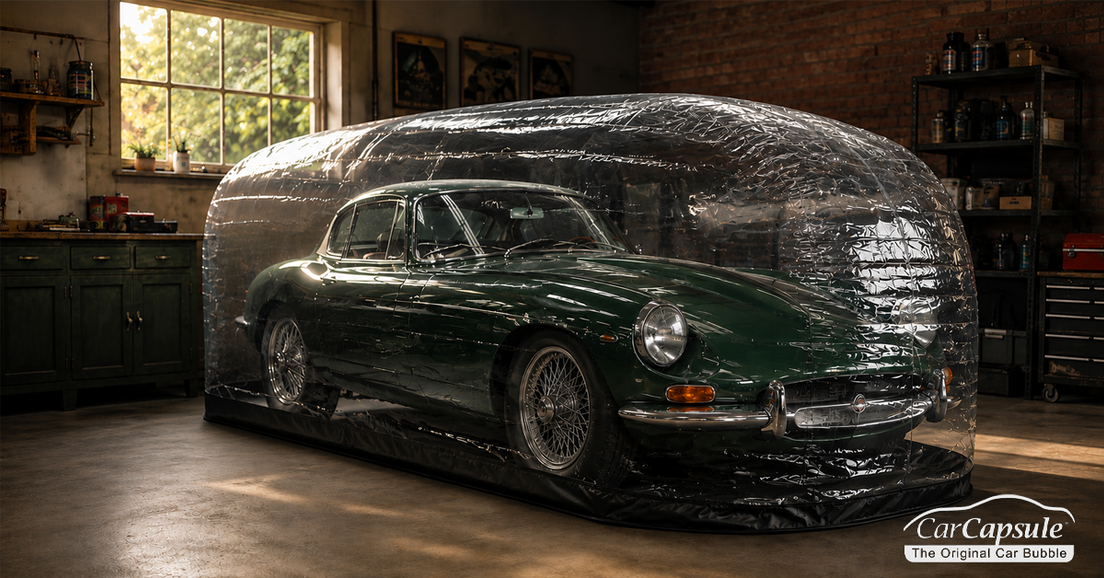
- A sealed, ventilated enclosure: The only method that isolates the car from the ambient garage environment while actively circulating filtered air. This is the approach CarCapsule pioneered when it received its original patent in 1991.
If you store in a high-humidity environment specifically, the case study of how CarCapsule protected Chris Morton's investment from rust in a high-humidity environment is worth reading before you commit to any storage method.
How a Sealed Storage Environment Stops Rust in Its Tracks
Traditional car covers create a microclimate: warm, humid, still air trapped against your paint. That's nearly the ideal environment for rust formation on bare metal edges and seams. A sealed inflatable enclosure reverses the equation entirely.
CarCapsule's patented storage bubbles continuously circulate filtered air through the enclosure using a low-draw blower motor. That airflow does two things: it prevents the static, moisture-saturated air that causes condensation, and it filters out the airborne particulates and pollen that etch paint over time. The clear PVC shell also means visible monitoring without disturbing the seal, which is something no opaque cover or garage corner setup offers.
This is not a passive solution. It's the closest thing to a controlled storage environment outside of a professional climate-controlled facility, and it costs a fraction of monthly storage fees.
Recognized by Motor Trend as one of the Top 10 Most Innovative Car Care Products, CarCapsule has been trusted by collectors since 1991 across every climate zone in the country. The product line covers vehicles from motorcycles to full-size trucks and SUVs:
- Indoor CarCapsule: Designed for garage storage, available in sizes from 10 to 20 feet. The right choice for most classic car collectors storing a single vehicle in a home garage.
- Outdoor CarCapsule: Built with a UV-resistant PVC shell for collectors who don't have garage access. It handles rain, snow, and hail while maintaining the same filtered airflow inside.
- Indoor Showcase: A display-oriented enclosure with enhanced visibility, ideal for show cars and garage collections where the car is meant to be seen as much as protected.
Sizing is straightforward: measure your vehicle's overall length and add approximately two feet for clearance front and rear. If your Mustang fastback is 15'3" bumper to bumper, a 18-foot capsule is the correct fit.
Dave Ceriotti had real concerns about condensation causing rust inside his ShowCase, and his experience after switching makes a compelling argument for the system. Read his story on why he no longer worries about condensation with his CarCapsule Showcase.
For a broader comparison of why a sealed bubble outperforms even a well-maintained garage for rust prevention, see the full breakdown at preventing rust and moisture damage with CarCapsule.
Maintaining Rust Protection Between Storage Seasons
Rust prevention doesn't stop at the start of storage season. A six-month check-in protocol keeps small problems from becoming expensive bodywork.
Monthly Visual Inspection (Takes 10 Minutes)
With a CarCapsule, this requires no disassembly. Walk around the outside and look through the clear shell. Check for any water pooling inside, any discoloration on painted surfaces, and confirm the blower motor is running. If you're using a traditional cover, pull it off completely, inspect the paint for water marks, and check the trunk and door seams for any reddish staining.
Replace Desiccants Every 60 to 90 Days
Interior desiccant packs saturate and lose effectiveness. In a humid climate, plan to swap them on a 60-day schedule from October through April. Silica gel packs are rechargeable in a low-heat oven if you want to avoid repeat purchases.
Run the Engine Briefly Every 30 Days When Possible
A 10-minute idle brings the engine to operating temperature, burns off moisture in the exhaust system, and redistributes oil across internal engine surfaces. It won't replicate a full drive, but it prevents the worst of the static corrosion issues inside the block. The Society of Automotive Engineers notes that static storage is one of the primary causes of cylinder wall micro-pitting in classic engines due to moisture accumulation in combustion chambers.
Spring Pull-Out Inspection Protocol
Before driving, inspect brake rotors and calipers for surface rust (expected and usually fine after one pass at low speed) and check the undercarriage for any new rust formation you didn't catch during monthly checks. Address any bare metal spots immediately with a rust converter product like Rust-Oleum Rust Reformer before they penetrate deeper into the substrate.
The Bottom Line: Protect What You've Built
The single most effective thing you can do to prevent rust on a classic car during storage is control moisture, not just keep dust off. Pre-storage prep, interior desiccants, corrosion inhibitors on bare metal, and a sealed ventilated enclosure work together as a system. Any one of them alone leaves gaps. All of them together give your Camaro, Porsche, or Mopar a genuine shot at coming out of storage exactly the way it went in.
CarCapsule has been solving this problem since 1991, backed by a one-year warranty and financing through Affirm. Whether you're storing a weekend driver or a concours-level restoration, the right enclosure eliminates the humidity cycling that a garage alone cannot stop.
Protect Your Classic Car from Rust: Explore CarCapsule Indoor Storage Solutions or call us at (219) 945-9493 for sizing help and custom questions.
Frequently Asked Questions
What humidity level causes rust on a classic car?
Rust formation accelerates measurably when relative humidity exceeds 60 percent, particularly on uncoated or bare steel surfaces common on pre-1985 vehicles. For long-term classic car storage, target a humidity range of 40 to 50 percent. Most unheated garages in northern climates swing well above 60 percent during winter, which is why ambient garage storage without moisture control is a high-risk approach for collector vehicles.
Should I use a car cover or a storage bubble to prevent rust?
A traditional fabric cover keeps dust off but traps moisture against paint and metal, which can actually accelerate rust on vulnerable surfaces. A sealed storage bubble with continuous filtered airflow, like a CarCapsule, prevents the condensation cycle entirely by isolating the car from the ambient environment. For serious rust prevention during long-term storage, a ventilated enclosure outperforms any cover by a significant margin.
How often should I check on a classically stored car for rust?
A monthly visual inspection is the practical minimum. With a clear-shell enclosure like a CarCapsule, this takes about 10 minutes without disturbing the seal. With a traditional cover, pull it completely and inspect door seams, trunk edges, and any known bare metal areas. If you're in a high-humidity climate, add a mid-month interior desiccant check to the schedule.
Does waxing a car before storage help prevent rust?
Yes, on painted surfaces. A quality carnauba wax or synthetic sealant creates a hydrophobic barrier that slows moisture penetration and prevents water from sitting against the clear coat and primer. It won't protect bare metal, seams, or the undercarriage, so waxing should be part of a broader prep protocol that includes rust inhibitors on uncoated areas and interior moisture management.
Can rust form inside a garage during winter storage?
Absolutely, and it's more common than most collectors expect. Unheated garages experience the same humidity cycling as outdoor air, just slightly moderated. Temperature swings cause moisture to condense on cold metal surfaces, especially on concrete floors and along body seams close to the ground. A sealed, ventilated enclosure inside a garage is not redundant protection. It's the layer that actually addresses the condensation cycle a garage roof cannot stop.