

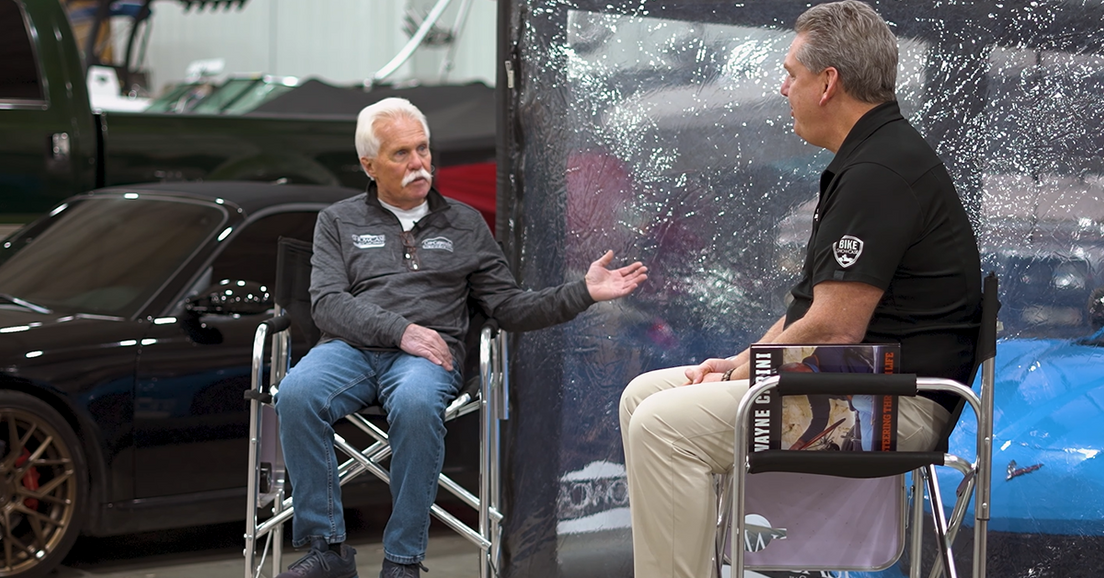
Wayne Carini's Approach to Protecting Collector Cars: Why Serious Enthusiasts Trust a CarCapsule
Posted by Phil Potocki on 20th Jul 2026
Who Is Wayne Carini and Why His Opinion on Car Care Matters
Wayne Carini has personally restored and sold more than 5,000 collector cars over four decades at F40 Motorsports in Portland, Connecticut. That isn't a résumé bullet. That's a career built on knowing exactly what kills a car's value before it ever hits the auction block: neglect, moisture, dust, and the slow grind of improper storage.
Fans of his television show Chasing Classic Cars know Wayne as the guy who can spot a numbers-matching Hemi from across a barn. What casual viewers miss is the preservation philosophy underneath every acquisition. Wayne doesn't just find great cars. He insists on protecting them the right way, which is exactly why his name is associated with CarCapsule.
For collectors who take their cues from someone who has handled Ferraris, pre-war American iron, and everything in between, Wayne Carini's standards for storage and protection carry real weight. His approach isn't theoretical. It's battle-tested across six-figure restorations where a single season of poor storage can undo years of work.
The Biggest Threats Facing Collector Cars in Storage
Parking a collector car and walking away is one of the most expensive mistakes an enthusiast can make. The threats that accumulate during storage are quiet, consistent, and compounding.
Moisture and Condensation
Temperature swings inside an unprotected garage create condensation that settles directly on bare metal, brake rotors, exhaust components, and chrome trim. According to the National Institute of Standards and Technology, metal corrosion accelerates dramatically when relative humidity exceeds 60 percent, and an enclosed garage with no airflow can sit well above that threshold during winter months. For a numbers-matching classic, even surface rust in the wrong place drops resale value by thousands.
Dust Accumulation and Paint Damage
Dust particles are not soft. Under a traditional fabric cover, fine particulate matter gets pressed against paint finishes every time the cover shifts or settles. On a concours-quality restoration, that means micro-scratches accumulating invisibly over months. You only see the damage when the cover comes off in spring.
Rodents
A stored car is a warm, dark, undisturbed shelter from a rodent's perspective. Mice and rats chew through wiring harnesses, upholstery, and insulation with no regard for originality or replacement costs. The Centers for Disease Control and Prevention documents dozens of rodent species active across North America year-round, not just in winter, meaning an unprotected stored vehicle faces this threat in every season.
UV Degradation
Even garage-stored cars near windows or in pole barns with translucent roofing panels take UV exposure. Vinyl, rubber seals, convertible tops, and interior plastics all degrade under sustained ultraviolet light. Fading and cracking in these components is irreversible without full replacement.
How a CarCapsule Works to Shield Priceless Vehicles
CarCapsule invented the inflatable vehicle storage bubble in 1991, patenting the concept before anyone else brought a competing product to market. The design principle is straightforward and it works: seal the vehicle inside a clear PVC enclosure and continuously circulate filtered air through the interior of that sealed space.
The continuous filtered airflow is the critical detail most people overlook. A static enclosure traps humidity and accelerates the exact conditions that cause condensation and mildew. CarCapsule's system runs an electric fan that draws air through a replaceable filter, maintaining positive pressure inside the bubble and ensuring that moisture-laden air is constantly replaced with drier, cleaner air. The result is a controlled microenvironment around your car, not just a physical barrier over it.
What the Enclosure Actually Blocks
- Dust: The sealed PVC shell prevents airborne particulate from ever reaching the paint surface.
- Rodents: The inflated barrier closes off every gap and access point a mouse or rat would use. No nesting, no chewing.
- Dings and contact damage: The pressurized bubble acts as a physical buffer. Tools, bikes, and other garage equipment that fall or shift can't reach the vehicle.
- Condensation: Filtered airflow keeps interior humidity low enough to prevent condensation from forming on metal surfaces.
- UV light: The PVC material provides a UV barrier that traditional open-garage storage simply cannot match.
Motor Trend recognized CarCapsule as a Top 10 Most Innovative Car Care Product, and after more than 30 years on the market, the product is backed by a 1-year warranty and an established track record that no imitation product can claim. Serious collectors who are protecting vehicles worth $50,000, $150,000, or more don't experiment with unproven solutions. They use the original.
Browse the full range of CarCapsule storage solutions to find the right fit for your vehicle type and storage situation.
Indoor vs. Outdoor CarCapsule: Choosing the Right Protection for Your Collection
The right CarCapsule depends on where you're storing the vehicle, not on how much you want to spend. These are genuinely different products engineered for different conditions.
Indoor CarCapsule
Designed for garage storage, the Indoor CarCapsule uses a lighter-weight clear PVC shell that prioritizes visibility and space efficiency. If you want to store and display a car in the same footprint, the Indoor unit is built for that. The clear shell means you can see the car from across the garage without deflating the capsule, which matters if you're rotating between multiple vehicles or running a collection display.
Outdoor CarCapsule
The Outdoor CarCapsule uses a heavier, more durable PVC construction engineered to handle UV exposure, rain, temperature extremes, and wind. If your collector car lives outside a garage, this is the correct solution. It's not a tarp with a blower attached. The sealed, pressurized system still runs the same filtered airflow protection as the Indoor model, which means your car gets the same controlled environment regardless of what's happening outside the capsule.
Sizing Guide
Choose your capsule size based on your vehicle's overall length plus approximately 2 feet of clearance. That buffer ensures the shell inflates fully around the vehicle without pressing against body panels. If you're measuring a car with a long hood, extended cab truck, or low-slung exotic with wide mirrors, measure the widest and longest points before ordering. Call (219) 945-9493 if you have a non-standard fitment question. Custom situations come up more often than you'd think, and it's faster to get the right size the first time than to exchange.
Showcase Options for Display-Focused Collections
For collectors who want maximum visual impact alongside protection, the ShowCase line offers a display-grade enclosure that lets guests see the vehicle clearly while keeping it fully sealed. It's the choice for garage environments where the car is part of the room, not just something parked in it. Explore the full CarCapsule products to compare options side by side.
Motorcycle collectors have a dedicated solution as well. The Outdoor Bike Showcase and the Bike Capsule Showcase bring the same sealed, filtered-airflow protection to two-wheeled collections, indoors or outside.
Why Serious Enthusiasts and Professionals Choose CarCapsule Over Traditional Covers
A traditional car cover is a passive solution. It sits on the car, collects dust on the outside, traps whatever humidity was already present underneath, and offers zero protection against rodents or contact damage. It also requires removal every time you want to look at or work on the car, which means handling the cover repeatedly and dragging particulates across the paint in the process.
A CarCapsule is an active system. The fan runs continuously. The air inside is filtered. The shell is sealed. The vehicle inside is effectively isolated from the surrounding environment in a way no fabric cover can replicate. That's not a marketing distinction. It's a functional one that matters over six-month storage periods when cumulative exposure adds up.
Collectors at the level Wayne Carini operates understand that the cost of proper storage is trivial compared to the cost of repainting a panel, re-chroming a bumper, or replacing a wiring harness. A vehicle stored correctly for 10 years comes out looking the same as it went in. A vehicle under a fabric cover in an uncontrolled garage environment rarely does.
The CarCapsule and Wayne Carini partnership page captures what this philosophy looks like from someone who has built a career on the difference between a preserved car and a neglected one. That difference is always visible, always affects value, and always comes back to decisions made during storage.
For additional context on how mechanical condition intersects with storage practices, the guide on fixing squeaky brakes covers a related maintenance issue that often surfaces after vehicles come out of long-term storage. And if paint protection is part of your storage prep, the technique covered in the dent removal walkthrough is worth reviewing before the car goes into the capsule.
The Hagerty Valuation Guide, widely used by collectors and insurers alike, consistently shows that storage condition is among the top factors affecting collector car values at auction. A well-documented storage history with a proper enclosure system is a selling point. Poor storage is a discount.
All CarCapsule products are available for review across CarCapsule, where you'll find sizing guidance, product comparisons, and support resources built for collectors who want to get the decision right.
Protect Your Collector Car Like the Pros: Shop CarCapsule Today
The single most important takeaway from Wayne Carini's career is this: a car's condition at the point of sale is a direct reflection of every storage decision made over its lifetime. A CarCapsule, the original patented vehicle storage bubble trusted since 1991, is how serious collectors control that outcome.
Whether your car lives in a climate-controlled garage or sits outside between shows, there's a CarCapsule built for that situation. Browse the full product lineup, confirm your vehicle's dimensions, and place your order online. Questions about fit or custom applications? Call (219) 945-9493 and speak directly with someone who knows the products.
Don't let six months of storage undo what took years to build.
Frequently Asked Questions
Does Wayne Carini use CarCapsule to protect his collector cars?
Wayne Carini is associated with CarCapsule and shares the brand's philosophy on collector car protection. As a professional who has restored and sold more than 5,000 vehicles over four decades at F40 Motorsports, Carini represents the standard of care that CarCapsule was built to support. His endorsement reflects a genuine alignment between his preservation standards and what the CarCapsule system delivers.
What is the best way to store a collector car long-term?
The most effective long-term storage method combines a sealed enclosure with continuous filtered airflow to control humidity, prevent dust contact, and block rodent access. A CarCapsule inflatable storage bubble provides all three. Pair the enclosure with a full fuel tank, fresh oil, an over-winter battery tender, and inflated tires to minimize mechanical issues when the car comes out of storage.
How does a CarCapsule protect against dust, moisture, and rust?
A CarCapsule seals the vehicle inside a clear PVC shell and runs an electric fan that circulates filtered air continuously through the enclosure. The sealed shell blocks dust from ever reaching the paint surface. The constant filtered airflow prevents humidity from building up inside the bubble, which eliminates the condensation that causes rust on bare metal, rotors, and chrome components during long storage periods.
Is a CarCapsule better than a traditional car cover for a classic car?
Yes, for long-term storage, a CarCapsule outperforms a traditional cover in every measurable way. A fabric cover traps existing humidity underneath, allows rodent access, and drags particulates across paint every time it's removed. A CarCapsule actively filters the air inside the enclosure, seals out rodents completely, and never touches the paint surface after initial inflation. For a classic car stored more than a few weeks, the comparison isn't close.
What do professional car collectors use to store valuable vehicles?
Professional collectors and restorers at the highest level use enclosed, controlled-environment storage solutions that manage humidity and prevent physical contact with the vehicle's surfaces. CarCapsule's inflatable storage bubbles are a trusted choice because the system actively maintains interior air quality rather than passively covering the car. For vehicles worth $50,000 or more, the marginal cost of a proper enclosure is negligible against the preservation value it delivers.