

Mold in Your Car: How It Starts, Why It's Dangerous, and How to Prevent It for Good
Posted by Phil Potocki on 27th Jul 2026
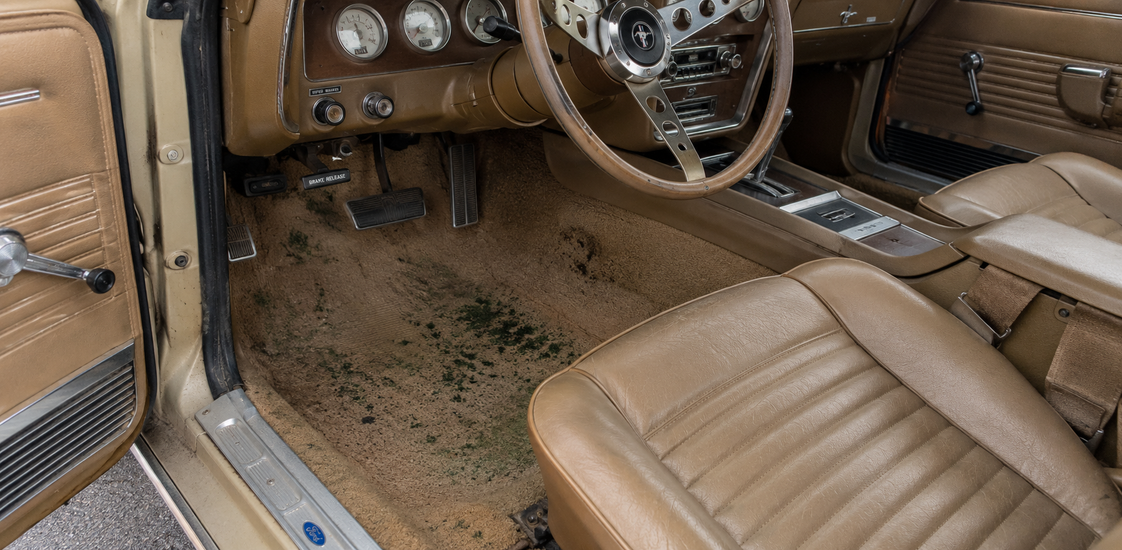
Pull a stored classic out of the garage in April and you might find something worse than flat tires and a dead battery: a thick, musty smell and gray-green fuzz creeping across the carpet. Mold in a car doesn't take long to establish itself. Under the right conditions, spores can colonize upholstery and carpet fibers in as little as 24 to 48 hours. Once it's there, cleanup is expensive, time-consuming, and rarely complete without addressing the root cause.
This post covers exactly how mold gets started inside a vehicle, why the health risk is more serious than most owners realize, how to identify and remove surface mold, and the one storage-level change that actually stops it from coming back.
What Causes Mold to Grow Inside a Car?
Mold needs three things: moisture, a food source, and stagnant air. A parked or stored vehicle supplies all three in abundance.
Moisture enters a car in more ways than most owners expect. A slightly open window lets in rain and humid air. A clogged sunroof drain tube backs water directly onto the headliner. Wet shoes and jackets introduce moisture into the carpet every single trip. Condensation forms on cold interior surfaces when warm, humid air hits them, which happens every night a car sits undriven in a damp garage. According to the EPA, indoor relative humidity above 60 percent is enough to trigger mold growth on nearly any porous surface, and car interiors regularly exceed that threshold during storage.
The food source isn't a problem for mold either. Organic material is everywhere inside a vehicle: carpet fibers, foam seat padding, leather, fabric headliners, and even the adhesive backing under floor mats. Dust and dirt trapped in those materials accelerate the process.
Stagnant air is the factor most owners never address. A closed, unventilated car interior traps humidity against surfaces. Without airflow, moisture has nowhere to go. That's the environment where mold in car carpet and upholstery turns from a few spores into a full infestation over a single winter.
Why Stored and Seasonal Vehicles Are Highest Risk
A daily driver cycles heat and airflow through the interior constantly, which works against mold. A stored Porsche 911, a winter-parked Mustang, or a seasonal-use motorcycle trailer that sits sealed from October through March has no such advantage. Cold weather keeps moisture from evaporating. The car sits dark, damp, and unventilated for months. By the time the owner pulls the cover off in spring, mold has had a full season to establish itself in the carpet, under the seats, and inside the HVAC ducts.
Why Mold in Your Car Is More Dangerous Than You Think
Most people treat car mold as a cosmetic problem. It isn't. The health implications are documented and significant, particularly for anyone who spends regular time inside the affected vehicle.
The CDC identifies mold exposure as a trigger for nasal stuffiness, throat irritation, coughing, wheezing, and skin irritation in otherwise healthy people. For individuals with asthma, allergies, or compromised immune systems, exposure to mycotoxins produced by certain mold species, including Stachybotrys chartarum (black mold), can cause more serious respiratory reactions. The enclosed volume of a car interior concentrates airborne spores far more than a typical room would.
Beyond personal health, mold causes structural damage. It breaks down carpet backing, weakens foam padding, stains headliners permanently, and works into HVAC systems where it recirculates spores every time the fan runs. A professional interior remediation on a collector car can easily run $500 to $1,500 or more depending on the extent of the infestation. For a vehicle with original interior, that cost can be irreplaceable.
For a detailed breakdown of the specific health risks involved, see our full explainer on why mold in a car is dangerous and what to do about it.
Warning Signs You Have Mold in Your Car
Mold isn't always visible right away. Here's what to look for when you're inspecting a stored or infrequently driven vehicle:
- Persistent musty or earthy odor that doesn't clear after airing out the vehicle
- Visible discoloration on carpet, seat fabric, or the headliner, ranging from white or gray to black or green
- Fuzzy texture on any interior surface, especially in corners, under seats, and along door sills
- Damp or wet carpet under floor mats, indicating a water intrusion source that's still active
- Allergy or respiratory symptoms that appear only when driving a specific vehicle
- Condensation on interior glass after the car has been closed overnight, signaling humidity levels high enough to support mold
Check the trunk and spare tire well too. Those areas trap moisture and often show mold before the passenger cabin does.
How to Remove Mold From Your Car Interior
Surface mold on non-porous areas can be wiped down. Mold that has penetrated carpet fibers or foam is a different problem entirely.
Step-by-Step Removal for Surface Mold
- Ventilate first. Open all doors and windows and work outdoors if possible. Don't run the HVAC fan during cleaning, as it will spread spores.
- Wear protection. Use an N95 respirator and nitrile gloves. This isn't optional.
- Vacuum with a HEPA filter. A standard shop vac exhausts spores back into the air. Use a HEPA-rated unit to vacuum all affected surfaces, including under seats and along carpet seams.
- Apply a mold-killing solution. White vinegar (undiluted) or a commercial automotive mold remover like Chemical Guys Fabric Clean work well on fabric and carpet. For hard surfaces, a diluted solution of white vinegar or a product containing hydrogen peroxide is effective. Avoid bleach on fabric because it degrades fibers and doesn't fully neutralize mold roots.
- Scrub and extract. Work the solution into carpet and upholstery with a stiff brush, then extract moisture with a wet-dry vac or carpet extractor. Repeat until no discoloration remains.
- Dry completely. This is where most DIY attempts fail. The interior must reach true dryness, not just surface dryness. Use a dehumidifier inside the car for 24 to 48 hours, or park in direct sun with doors open. Residual moisture restarts the cycle.
- Treat the HVAC system. Run a mold-killing HVAC spray through the intake vents with the system on recirculate. If the musty smell persists from the vents, the evaporator core may need professional cleaning.
When to Call a Professional
If mold has reached the foam padding beneath the carpet, DIY removal is rarely sufficient. Padding holds moisture and spores deep where surface treatments don't penetrate. At that point, the carpet and padding typically need to come out entirely. For a collector car or any vehicle with original, irreplaceable interior materials, professional remediation is the right call from the start.
The Best Way to Prevent Mold in Your Car Long-Term
Cleaning up existing mold is reactive. The only approach that actually works long-term is eliminating the conditions that cause mold in the first place, specifically moisture and stagnant air.
Basic Moisture Control Steps
Before storage, check and clear sunroof drain tubes, inspect door seals for cracks, and make sure the cabin is completely dry. Place a desiccant packet (silica gel) inside the vehicle to absorb residual humidity. These steps reduce moisture but don't eliminate it, especially in climates with wide seasonal humidity swings.
Why Traditional Covers Don't Solve the Problem
A standard car cover stops physical debris but traps moisture against the paint and interior. Under a cover, a sealed vehicle sits in exactly the stagnant, humid microclimate mold prefers. Vinyl car covers are worse, as they're essentially non-breathable tents. Even breathable fabric covers allow humidity to build up inside when the air isn't moving.
Controlled Storage With Continuous Airflow: The CarCapsule Approach
CarCapsule invented the inflatable vehicle storage category in 1991, and the core engineering insight behind the original patent is still the most effective mold-prevention mechanism available: continuous, filtered airflow through a sealed enclosure.
Each CarCapsule unit uses a low-draw blower motor to maintain gentle positive air pressure inside a clear PVC enclosure. That airflow runs through a filter, pulling in clean, dry air and preventing the humid, stagnant conditions mold requires. The vehicle inside is always in a slight positive-pressure environment, which means moisture-laden air from outside can't settle against the interior. It's the same principle used to protect sensitive electronics and archival materials. Applied to a stored Corvette, Camaro, or classic truck, it works exactly as well.
For garage storage, the Indoor CarCapsule provides this protection in a clear enclosure that also lets you display the vehicle. Owners without a dedicated garage can use the Outdoor CarCapsule, which adds UV-resistant material rated for year-round outdoor exposure while maintaining the same airflow-driven protection against moisture and mold. For collectors who want display-quality presentation alongside full protection, the Indoor Showcase combines a rigid base with the same sealed, ventilated enclosure system.
Motor Trend named CarCapsule one of the Top 10 Most Innovative Car Care Products, recognizing exactly this approach: solving a systemic problem at the storage level rather than treating symptoms after the fact. Every unit comes backed by a one-year warranty and more than three decades of refinement in real storage environments across every U.S. climate.
Simple Sizing Guidance
Choose a capsule based on your vehicle's overall length plus about two feet of clearance on each end. If you're storing a motorcycle or powersports vehicle, CarCapsule's dedicated outdoor motorcycle storage solutions apply the same airflow principle at the right scale. For sizing questions or custom applications, call CarCapsule directly at (219) 945-9493.
Stop Mold Before It Starts
Mold in a car is a storage problem with a storage solution. Cleaning up an existing infestation is costly and imperfect. Eliminating the conditions that allow mold to grow, specifically moisture accumulation and stagnant air inside a sealed vehicle, prevents the problem from occurring at all. That's what 30-plus years of vehicle storage engineering at CarCapsule has been built around.
Protect your vehicle from mold with a CarCapsule. Shop indoor storage solutions or explore outdoor storage options built to keep moisture out of your stored vehicle year-round.
Frequently Asked Questions
Can mold in a car make you sick?
Yes. Mold spores released inside an enclosed vehicle cabin can trigger nasal congestion, throat irritation, coughing, and wheezing in healthy individuals. People with asthma, allergies, or weakened immune systems face a higher risk of more serious respiratory reactions. The EPA and CDC both document mold exposure as a health concern, and the small volume of a car interior concentrates airborne spores more than a typical room would. For more detail on the specific risks, see our guide on how dangerous mold in a car can be.
How do I know if my stored car has mold?
The first sign is usually a persistent musty or earthy odor that doesn't clear after you open the doors. Look for visible discoloration (white, gray, green, or black patches) on carpet, fabric seats, door panels, or the headliner. Check under seats and floor mats, inside the trunk, and along door sill seams, where moisture collects and mold establishes itself before it becomes visible in the main cabin.
Does a car cover prevent mold?
Standard car covers do not prevent mold and can make it worse. A cover traps humidity against the vehicle's exterior and allows it to build up inside a non-circulating environment. Breathable covers reduce surface condensation but don't address the stagnant air that allows mold to grow. A storage solution with continuous filtered airflow, like a CarCapsule inflatable enclosure, is the only cover-type product that actively removes the moisture and air stagnation mold requires.
What humidity level causes mold in a car?
The EPA identifies 60 percent relative humidity as the threshold above which mold growth becomes likely on porous surfaces. Car interiors, especially those that are closed and unventilated during storage, routinely exceed that level during fall and spring when outdoor humidity is high and temperatures fluctuate. A stored vehicle in a damp garage can sustain interior humidity above 70 percent for weeks at a time, which is more than enough to support active mold colonization in carpet and upholstery.
How do I get rid of musty smell in a stored car?
Start by finding and eliminating the moisture source, whether that's a clogged drain tube, a leaking seal, or residual dampness in the carpet and padding. Clean all affected surfaces with white vinegar or a commercial mold remover, then dry the interior completely using a dehumidifier or direct sun exposure for 24 to 48 hours. Treat the HVAC system with a duct-cleaning spray. If the smell returns after drying, the mold has penetrated into foam padding beneath the carpet and the padding likely needs to be replaced.